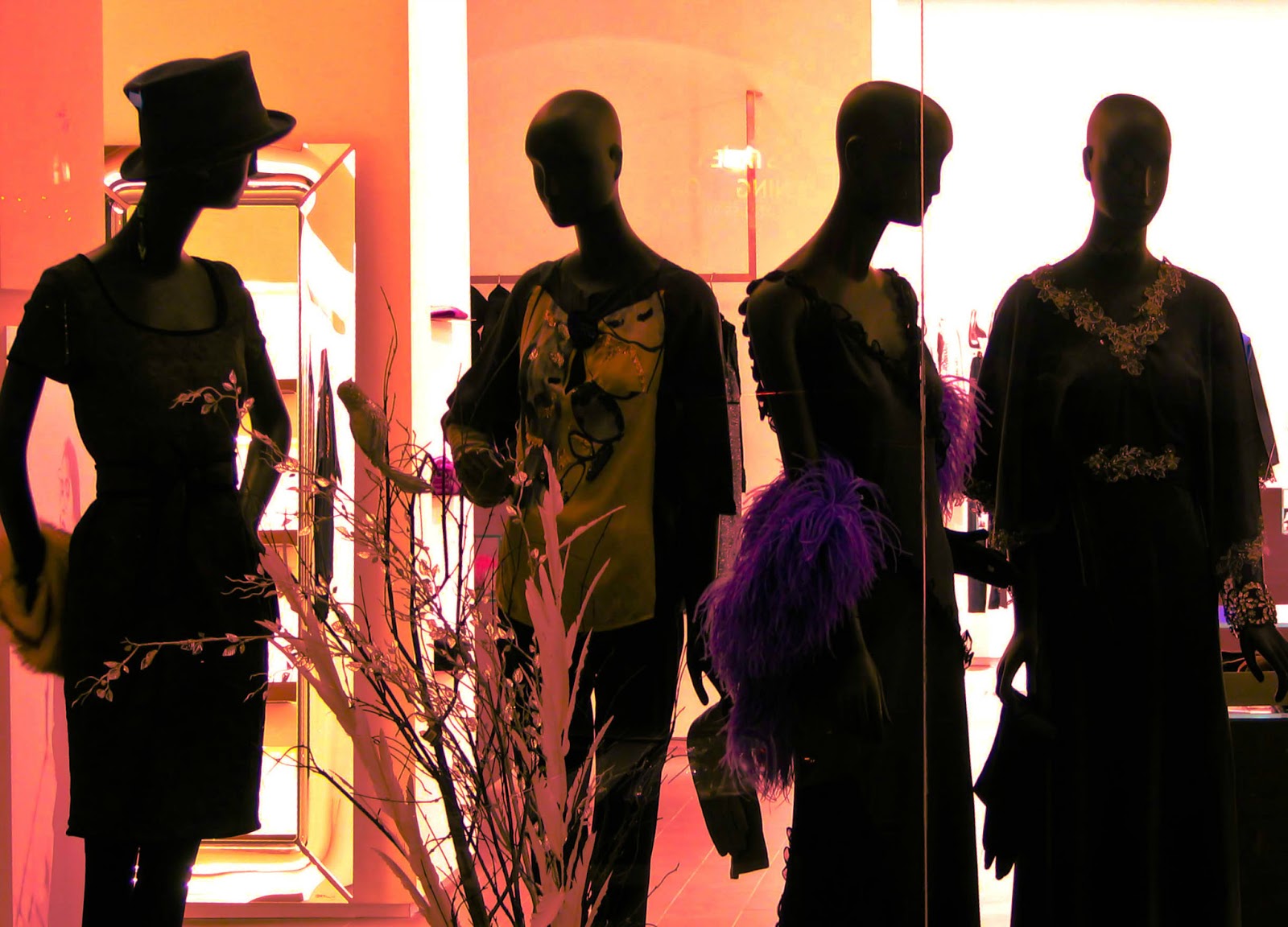
As I look back, over my life, I am struck by post cards... ruined snapshots, faded posters of a time I can't recall.
Il a mis le café
Dans la tasse
Il a mis le lait
Dans la tasse de café
Il a mis le sucre
Dans le café au lait
Avec la petite cuiller
Il a tourné
Il a bu le café au lait
Et il a reposé la tasse
Sans me parler
Il a allumé
Une cigarette
Il a fait des ronds
Avec la fumée
Il a mis les cendres
Dans le cendrier
Sans me parler
Sans me regarder
Il s'est levé
Il a mis
Son chapeau sur sa tête
Il a mis son manteau de pluie
Parce qu'il pleuvait
Et il est parti
Sous la pluie
Sans une parole
Sans me regarder
Et moi j'ai pris
Ma tête dans ma main
Et j'ai pleuré
Déjeuner du matin; poème de Jacques Prévert (Paroles, 1946)
Les Lumières de la ville; comédie dramatique réalisée par Charles Chaplin (sortie le 30 janvier 1931)
Je préfère la vie à la mort, exister à ne pas exister, car je ne suis pas sûr d'être une fois que je n'existerai plus.
Eugène Ionesco, Rhinocéros
The light of memory, or rather the light that memory lends to things, is the palest light of all. I am not quite sure whether I am dreaming or remembering, whether I have lived my life or dreamed it. Just as dreams do, memory makes me profoundly aware of the unreality, the evanescence of the world, a fleeting image in the moving water.
Eugène Ionesco
Adorable images,
Plaster of Paris
Lilies of the field,
You are not alive, therefore
Pathos will be out of place.
But I have learned
A strange fact about your fate,
And it is this:
After you go out of fashion
Beneath your many fashions,
Or when your elbows and knees
Have been bruised powdery white,
So that you are no good to anybody—
They will take away your gowns,
Your sables and bathing suits,
Leaving exposed before all men
Your inaccessible bellies
And pointless nubilities.
Movers will come by night
And load you all into trucks
And take you away to the Camps,
Where soldiers, or the State Police,
Will use you as targets
For small-arms practice,
Leading me to inquire,
Since pathos is out of place,
What it is that they are practicing.
To the Mannequins / November 1961
by Howard Nemerov (1920–1991)
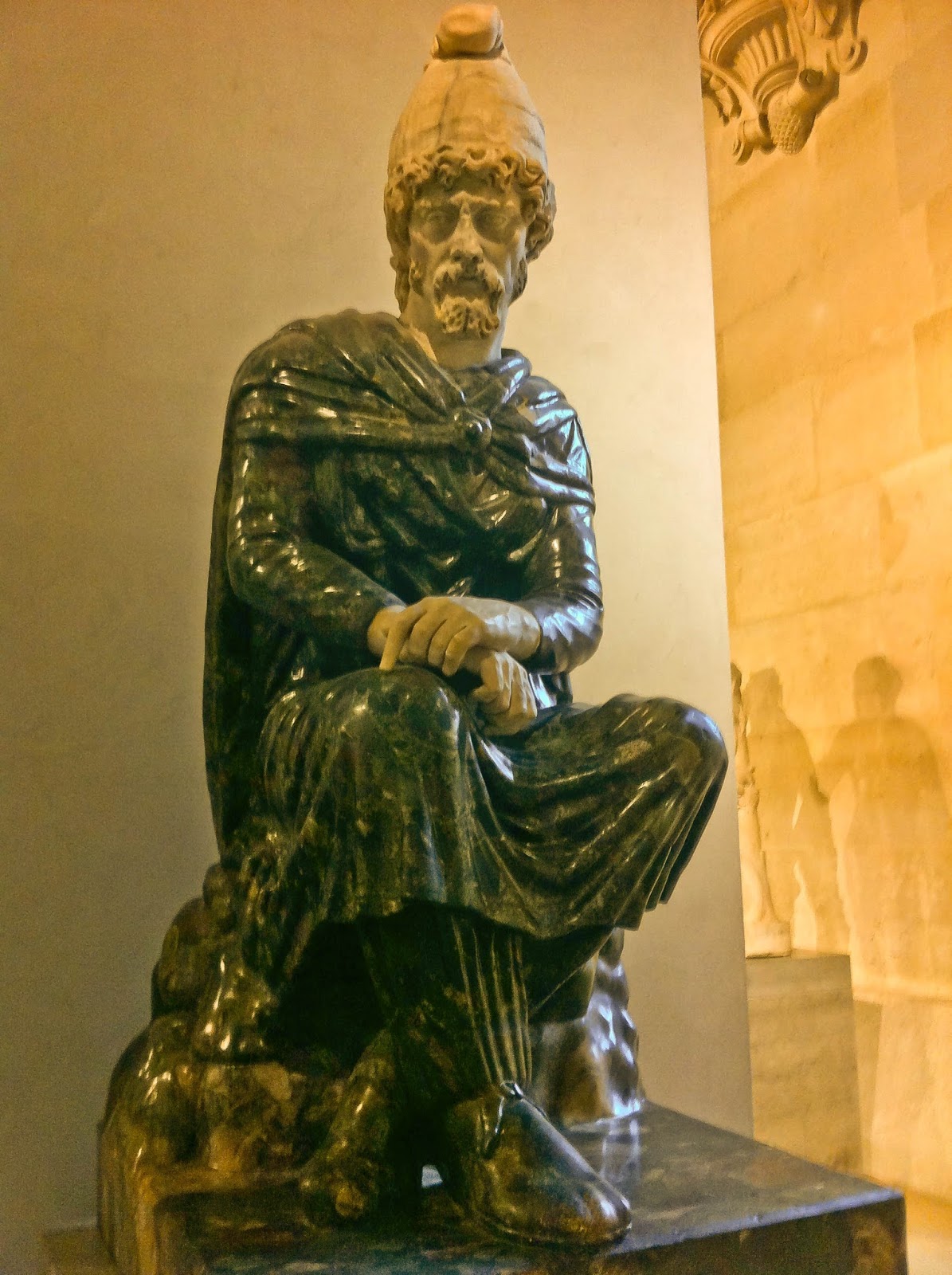
Les Daces du Louvre
![]() |
| Musée du Louvre: Département des Arts graphiques: Rubens Peter Paulus (1577-1640): Victoire des Romains sur les Daces |
![]() |
| Musée du Louvre: Département des Antiquités grecques, étrusques et romaines (Salle du Manège): Barbare captif |
![]() |
| Musée du Louvre: Département des Antiquités grecques, étrusques et romaines (Salle du Manège): Barbare captif |
![]() |
| Musée du Louvre: Département des Antiquités grecques, étrusques et romaines (Salle du Manège): Barbare captif |
![]() |
| Musée du Louvre: Département des Antiquités grecques, étrusques et romaines (Salle du Manège): Barbare captif |
![]() |
| Musée du Louvre: Département des Antiquités grecques, étrusques et romaines (Salle du Manège): Barbare captif |
![]() |
| Musée du Louvre: Département des Antiquités grecques, étrusques et romaines (Salle du Manège): Barbare captif |
![]() |
| Musée du Louvre: Département des Antiquités grecques, étrusques et romaines (Salle du Manège): Barbare captif |
![]() |
| Musée du Louvre: Département des Antiquités grecques, étrusques et romaines (Salle du Manège): Barbare captif |
![]() |
| Musée du Louvre: Département des Antiquités grecques, étrusques et romaines (Salle du Manège): Barbare captif |
![]() |
| Musée du Louvre: Département des Antiquités grecques, étrusques et romaines (Salle du Manège): Barbare captif |
![]() |
| Musée du Louvre: Département des Antiquités grecques, étrusques et romaines (Salle du Manège): Barbare captif |
![]() |
| Musée du Louvre: Département des Antiquités grecques, étrusques et romaines (Salle du Manège): Barbare captif |
![]() |
| Musée du Louvre: Département des Antiquités grecques, étrusques et romaines (Salle du Manège): Barbare captif |
![]() |
| Musée du Louvre: Département des Antiquités grecques, étrusques et romaines (Salle du Manège): Barbare captif |
![]() |
| Musée du Louvre: Département des Antiquités grecques, étrusques et romaines (Salle du Manège): Barbare captif |
![]() |
| Musée du Louvre: Département des Antiquités grecques, étrusques et romaines (Salle du Manège): Barbare captif |
![]() |
| Musée du Louvre: Département des Antiquités grecques, étrusques et romaines: empereur Trajan (98 - 117) debout et cuirassé (statue en marbre de Paros) |
Pour en savoir plus sur le sujet, cliquez sur les liens suivants:
La Roumanie : sœur latine ou cousine orientale ?
Histoire des Balkans septentrionaux: 1er ~ 14ème siècle (page web en anglais)
Guerres daciques de Trajan
Victoire des Romains sur les Daces
Captif assis
Barbare captif
Salomon Reinach - La Colonne Trajane (1886)
Trajan debout, cuirassé
Le Palais Farnese
L'Empereur Trajan (98 - 117 après J.-C.)
Imperial Rome Exhibition Debuts at Italian Academy (page web en anglais)
Les Daces dans la sculpture romaine
Cantacuzino Castle - whose construction was completed in 1911, it is built in Neo-Romanian style; the total surface of the estate is over 3,000 square meters.
The Cantacuzino or Cantacuzène family, a princely family of Wallachia, Moldavia and Russia, descents from a branch of the Greek Kantakouzenos family, descended from the Byzantine Emperor John VI Kantakouzenos (reigned 1347–1354). In Russia, the family received princely (Knyaz, as opposed to Velikij Knyaz) status. In 1944 Prince Ștefan Cantacuzino settled in Sweden.
The Brașov Council Square (Piața Sfatului in Romanian, former Marktplatz in German) obtained its right to hold markets in 1520, but it has been the place for annual markets since 1364, being visited by merchants from the country and abroad. The houses surrounding the square speak of a rich history. A pillory, in the middle of the square, was used as a means for public humiliation, punishment and scorn. Witches were also punished here, but the head of the shoemaker guild, Stefan Stenert, who opposed the entry of the Austrian army into Brașov, was also beheaded here in 1688. Till 1892 there were two wells in the square. The most important building in the square is the Council House, which was built in 1420 and is located in the middle of the square.
The Orthodox Church of the Assumption (June 9th, 1895) in the Brașov Council Square.
The imposing building of the "Black Church" in the centre of Brasov was built during the 14th and 15th century. The construction started in 1383. In 1421, when the construction work was nearing its end, Turkish raids caused extensive damage to the church as well. The church was inaugurated in 1477, while the tower in 1514.
The Catholic services in Schwarze Kirche (Biserica Neagră or Fekete templom) were replaced with Lutheran ones during the Protestant Reformation, coinciding with the influence exercised by Johannes Honter. A statue in memory of Honter was later erected by Harro Magnussen on one side of the building. The structure was partially destroyed during a great fire set by invading Habsburg forces on the April 21, 1689 (during the Great Turkish War). Afterwards, the church of Saint Mary became known as the "Black Church". A large part of the inner structure was modified during the 18th century, in Baroque style (breaking with the original design).
The Heroes' Cross is a monument built between 1926 and 1928 on Caraiman Peak at an altitude of 2,291 m located in Romania, in the Bucegi Mountains of the Southern Carpathians. It has a height of 36 metres (118 ft) and the nearest town is Buşteni.
Close to Caraiman peak lies the Heroes' Cross, a memorial of World War I. It was initiated by Queen Mary of Romania. The material needed for construction was carried up using a funicular, as well as carts carried by oxen.
The cross is lit at night using 300 500 W bulbs. Until 1939, the lighting installation was powered by an electric generator located inside the base of the monument and was made up of only 120 bulbs. In 1939, it was connected to the national electrical network.
Subscribe to:
Posts (Atom)